Every October 5th, we celebrate World Teachers’ Day to show appreciation for the educators who enlighten us with their knowledge.
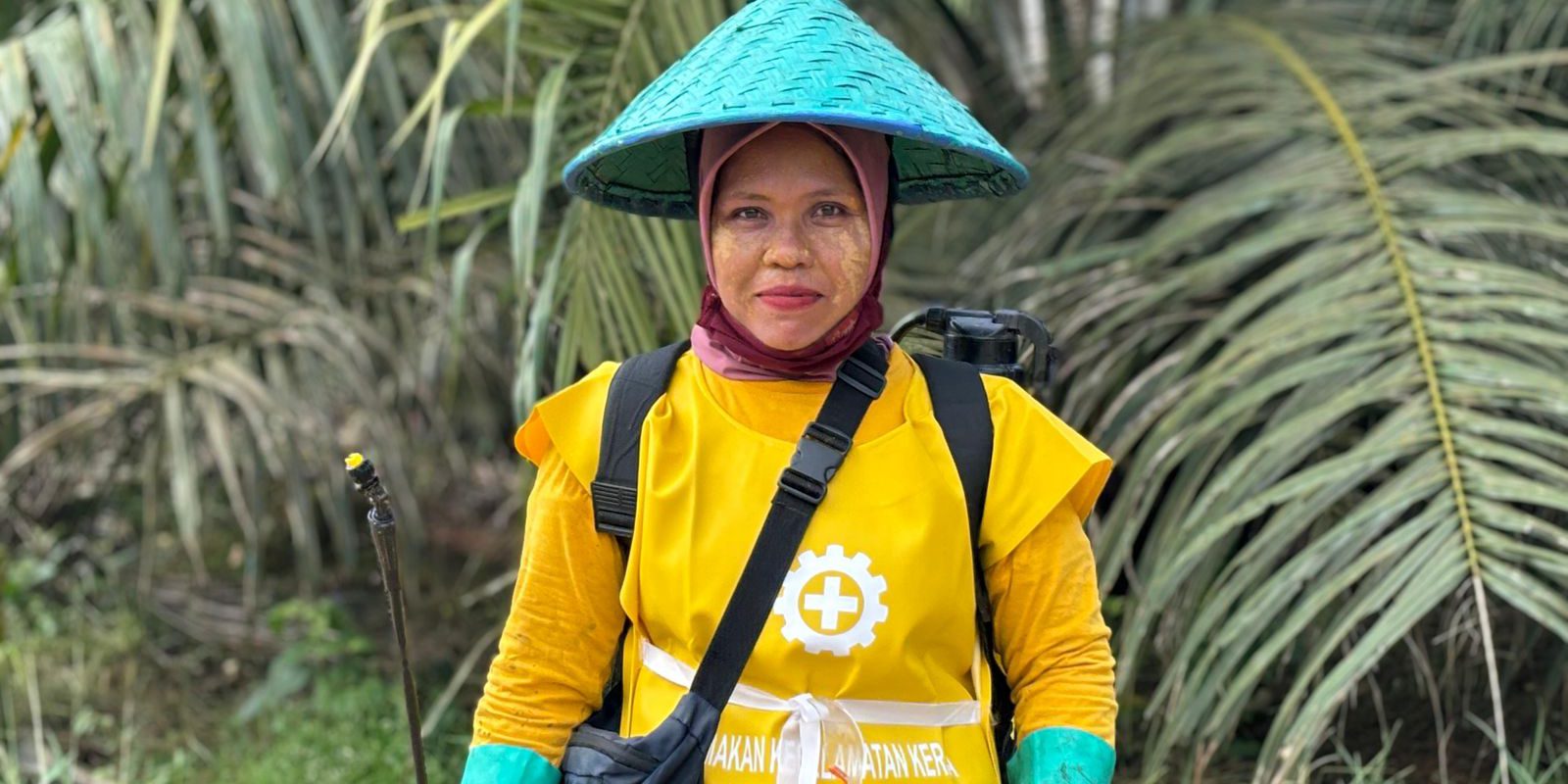
However, teachers are not always found behind a classroom desk or a blackboard. Sometimes, they can be found in plantations, simple homes, or even in the midst of their daily professions. One such individual is Harminah, affectionately known as Anggi. She works as a care provider at PT Sukses Tani Nusasubur (STN), a subsidiary of PT Astra Agro Lestari Tbk, located in Penajam Paser Utara (PPU), East Kalimantan.
Born in Sekunyit, Central Lombok, on April 4, 1985, Anggi grew up in a family that earned a living through farming and selling basic necessities. Raised in a rural environment with limited access to education, she faced many challenges.
However, Anggi never allowed these limitations to hinder her aspirations. It was during this time that her strong desire to become a language teacher developed. At MAN 1 Praya Lombok, a well-regarded school in a highly competitive city, she chose to major in Language.
Her motivation was both simple and profound: she wanted to interact more easily with those around her and with the foreign tourists who often visit Lombok Island. For Anggi, language serves as a bridge to understanding the world.
She diligently studies English, believing it to be the key to global communication, and Arabic, due to its significant spiritual value in the Islamic faith.
It’s not easy, of course. Grammar and foreign vocabulary once felt daunting, but the language laboratory facilities available at the school provided him with a space to practice speaking directly.
That’s where she became accustomed to speak English in conversations, particularly with her English teacher. Anggi ultimately graduated as the top student in the Language Department in 2004.
“I even delivered my graduation message and shared my impressions in English on stage. My parents were there, and my teachers watched me. Everyone was moved,” he said.
At that school, he felt like he was fighting in a lion’s den. The city children, some from affluent families, were his competitors. However, her spirit overcame her fear, and he emerged as the champion. Behind her achievements were two figures who quietly ignited her passion.
Mr. Komari, his English teacher in junior high school, was the first to believe he had great potential. Additionally, Zia Ulhaq, a friend and rival from junior high, thought that while Anggi might be smart in the village, he wouldn’t be able to compete in the city.
Zia’s confidence didn’t hurt Anggi; it fueled her.
Unfortunately, the path through college wasn’t as smooth as she had hoped. She was offered a special track at Mulawarman University, but her parents didn’t allow it because the distance was too far. Anggi also tried to stay at Lombok University, even though she had to take Islamic Religious Education, which was not her choice.
“I lasted until the second semester, but my heart wasn’t in it. Eventually, I quit,” she said softly.
For Anggi, the decision left her feeling suffocated, but it didn’t break her. She is determined to continue her dream through her children.
“If I couldn’t go to college, my children have to aim higher. Now my child is studying at Gontor,” she said proudly.
Teaching from the Heart, Not Just a Profession
Amidst her busy schedule as a caregiver and homemaker, Anggi also volunteered as a teacher. She taught English from house to house, to departments, in technical housing, and even to the homes of staff members, without ever charging a fee.
“I didn’t ask for anything, but they gave me money for gas, parcels, vegetables, and even food. They really value knowledge,” she said with sparkling eyes.
It’s not uncommon for people to assume she is a former migrant worker just because she is fluent in English. She laughed as she shared this story. “Even though I studied in school, not abroad,” she explained.
Through this experience, she discovered that education doesn’t have to take place in a classroom. She taught in the kitchen, on the veranda, and in between working in the fields. Her methods were flexible, often incorporating songs, games, and small gifts to boost children’s enthusiasm.
The children she taught would wait for her, even in the rain. “They said, ‘Mom will definitely come.’ That touched my heart,” she recalls.
When those children received good grades in school or began explaining lessons to their peers, all her fatigue would vanish.
Even amidst her increasingly busy schedule, her enthusiasm for sharing knowledge never wanes. She still makes time to teach her children at home while managing a small grocery store business.
“I believe that if we can do it, it’s because we’re used to it,” she said with full confidence.
Language remains an integral part of her life. In her work, she feels more prepared because she understands terms like “fit to work,” “take action,” “ready to work,” and “nearmiss.”
For many people, these terms are unfamiliar, but for her, they are essential tools. At home, she uses Indonesian to help her children learn and Arabic to teach them prayers and the meanings of Quranic verses.
As part of the Astra Agro Lestari family, Anggi is aware that training and scholarships are widely available. She is grateful for the opportunities for employees’ children to pursue higher education, as well as for employees to obtain certifications and skills training.
When asked about her unfulfilled dreams, Anggi didn’t mention a degree or a position. “If there are scholarships available, I want to study languages again. Language is a world,” she said briefly, but with determination. For her, the opportunity to learn isn’t about age but about the courage to keep going.
She firmly believes that both formal and non-formal education are rights that everyone should have.
Source: Tribun Kalteng

Disclaimer
This article may contain copyrighted material, the use of which may not have been pre-authorized by the copyright owner. This material is made available for the purpose of giving information and knowledge. The material contained on the Astra Agro website distributed without profit. If you are interested in using copyrighted material from this material for any reason that goes beyond ‘fair use’, you must first obtain permission from the original source