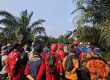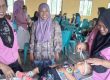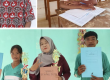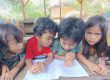
Desi and Kurnia are two notable young women from the Suku Anak Dalam (SAD) community who have left their hometowns to pursue higher education with determination.
Desi has been attending university for nearly 3 years, dedicating her time to her academic responsibilities. She is enrolled in the Faculty of Teacher Training and Education (Civics Education/PPKN) at Universitas Jambi, located in Muaro Bulian, Muaro Jambi Regency, approximately 15 kilometres from central Jambi city. She selected this major with the goal of advancing her community by teaching SAD children literacy skills.
“I am proud to be born as a part of SAD Community, but our lives are difficult because not all of us are aware of the importance of education. At my age, many choose to get married rather than continue schooling,” said Desi.
Desi, the eldest daughter of Munawir and Indra Wati, moved to Jambi to pursue higher education. As the first of four children, she is motivated to continue her studies to improve her family’s living conditions and support her siblings.
Although many children from the SAD community in her village have started pursuing education, few remain committed to continuing to higher education as she has.
“I don’t mind living far from my family because I want to make my parents proud. I want to keep studying so I can achieve my dreams and become a role model for my younger siblings,” she added.
Desi also expressed her aspiration to surpass her parents’ educational attainment, as they were only able to complete elementary school.
The Suku Anak Dalam (SAD), also known as Orang Rimba, are an indigenous people residing on the island of Sumatra, particularly in Jambi and South Sumatra provinces. Traditionally, they have led a nomadic lifestyle, relying on hunting and gathering forest products. In recent years, many have chosen to leave the forest, settle in permanent areas, and integrate with surrounding communities.
Kurnia’s experience demonstrates similar determination. At 20 years old, she continues to pursue her childhood ambition of becoming a healthcare worker. It is uncommon for members of the Orang Rimba community to continue their education at public higher education institutions in Jambi.
Kurnia and her extended family, members of the SAD community, originate from Bukit Suban Village, Air Hitam District, Sarolangun Regency, Jambi. Despite limited access to urban educational resources, as the second of four siblings, she remained hopeful and motivated.
She developed confidence through adaptation and active social engagement. Despite originating from a remote village, she successfully adjusted to university life in the city and interacted with individuals from diverse backgrounds.
However, she frequently encountered doubt, particularly when some community members and peers questioned her aspirations, leading to periods of discouragement and consideration of abandoning her goals.
“When I said I got accepted into the health faculty, I cried. Some people came not to support me but to make me doubt myself. At that time, I really didn’t know what to do, especially because of the cost of living in the city,” Kurnia recalled.
Ultimately, both Desi and Kurnia realized their ambitions and successfully enrolled in university with substantial support.
“All my school and university expenses—even my allowance and daily needs while living away from home—were covered by PT SAL,” Kurnia said.
“It’s not just about school and university—our parents were also supported by PT SAL to help provide for our younger siblings,” Desi added.
For Desi and Kurnia, PT Sari Aditya Loka (SAL) has provided comprehensive support, including material, non-material, and moral assistance, enabling them to pursue higher education at leading institutions in Jambi.

As a business entity of Astra Agro in Jambi, PT SAL prioritizes harmonious relationships with surrounding communities as a core operational principle. Supporting Desi, Kurnia, and other SAD community members is considered a fundamental value within the company’s culture.
Currently, both Desi and Kurnia have completed their sixth semester and are preparing for practical exams and semester evaluations for the upcoming academic term.
Desi achieved a GPA of 3.81 in her third semester and continues to develop innovative methods for delivering Civics Education materials, such as through educational videos.
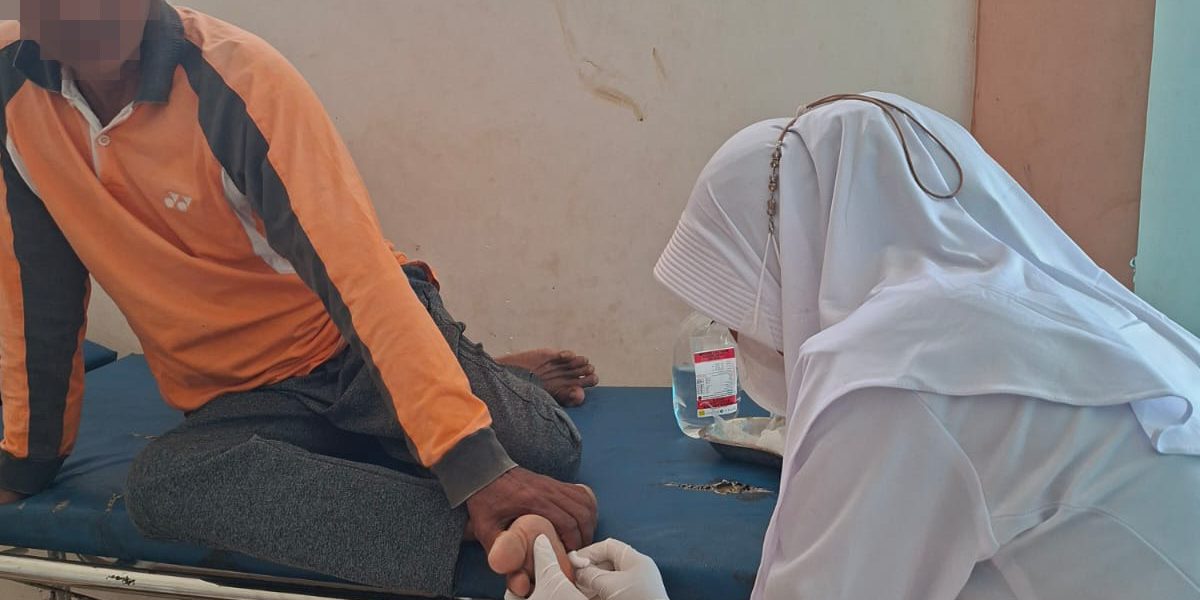
Kurnia, a student at the Jambi Health Polytechnic, has completed her fieldwork internship (PKL) as part of her graduation requirements. This experience enables her to apply academic knowledge in community settings.
Astra Agro demonstrates its commitment to sustainable coexistence by actively empowering local communities, including indigenous peoples, in addition to its business activities. This commitment is evident in its assistance and empowerment programs for the SAD community, particularly in education.
Within the SAD community, Astra Agro supports Community Learning Centers (PKBM), expanding educational access for children who have historically faced barriers to formal schooling. In 2025, 412 SAD children participated in learning activities across 13 PKBM centers, supported by 19 teachers. Scholarships were also provided to 412 children at various educational levels, from early childhood to higher education.
More broadly, Astra Agro’s contributions to education are reflected in its Astra Cerdas pillar, which supports numerous schools across Sumatra, Kalimantan, and Sulawesi. In the same year, 194 schools received support, involving 2,811 teachers and benefiting 37,716 students.
Through initiatives such as education festivals, academic competitions, and Astra Education Scholarships, the company aims to foster a more inclusive and competitive learning ecosystem.
Scholarship programs remain a central initiative with significant impact. In 2025, 1,981 students from assisted schools received scholarship support.
Astra Agro also emphasizes improving educator quality. The company provides monthly incentives to 581 honorary teachers in recognition of their dedication and offers competency development training for 226 teachers to enhance teaching capacity and adaptability to innovative learning methods.
Aligned with the spirit of National Education Day, these efforts underscore that education is a shared responsibility. Astra Agro positions itself as a strategic partner in advancing education for communities near its operations.
The experiences of Desi and Kurnia exemplify Astra Agro’s broader mission to nurture hope, expand opportunities, and create a better future through education.