RADAR PALU — Climate change is placing increasing pressure on aquatic and coastal ecosystems. Strengthening ecosystem resilience requires an approach grounded not only in scientific knowledge but also in the involvement of communities whose lives and livelihoods depend on these environments.
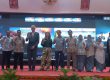
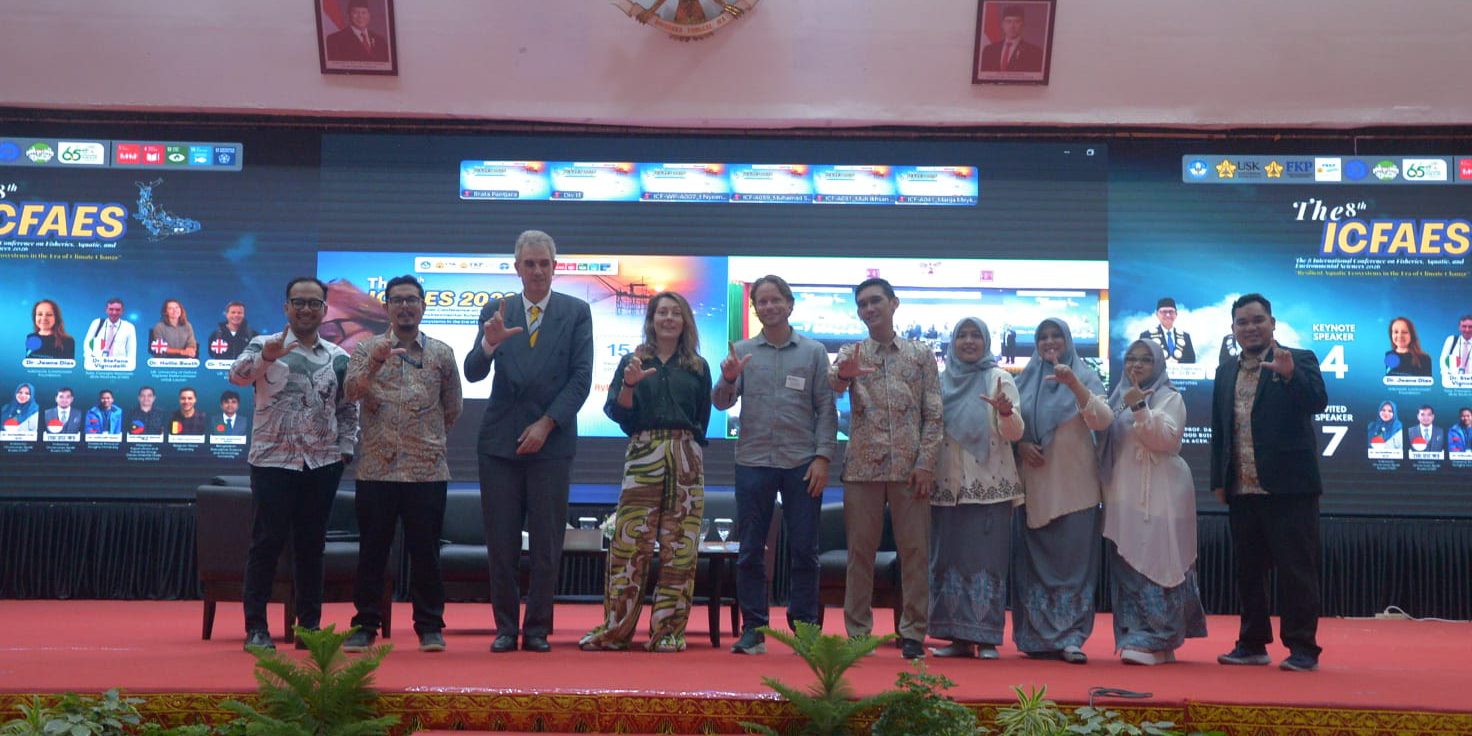
This perspective was among the key topics discussed at the 8th International Conference on Fisheries, Aquatic and Environmental Sciences (ICFAES) 2026, organized by Syiah Kuala University (USK) through its Faculty of Marine and Fisheries Sciences (FKP) on Tuesday, September 15, 2026, at the AAC Prof. Dr. Dayan Dawood, USK, in Banda Aceh.
Themed “Resilient Aquatic Ecosystems in the Era of Climate Change,” the conference brought together academics, researchers, practitioners, policymakers, and stakeholders to discuss challenges and solutions for the sustainability of aquatic and coastal ecosystems.
ICFAES 2026 received 97 abstracts for oral and poster presentations from 66 institutions, including universities, national research institutions, nongovernmental organizations, and industry partners.
Participants and contributors came from 12 countries: Indonesia, the United Kingdom, Italy, Belgium, Thailand, the Philippines, Bangladesh, Malaysia, Nigeria, India, Japan, and Pakistan.
ICFAES 2026 Chairperson Dr. Syahrul Purnawan, S.Pi., M.Si., said the conference provided a platform to strengthen collaboration in science, conservation, and sustainable resource management.
“This theme reflects our shared commitment to addressing the growing challenges facing aquatic ecosystems and to strengthening collaboration in science, conservation, and sustainable resource management,” Syahrul said in his opening remarks at ICFAES 2026.
One of the perspectives presented at the forum came from the private sector. Adlan Yusran, Conservation Management & Nature-based Solutions Manager at PT Astra Agro Lestari Tbk, participated as an invited speaker, sharing the company’s experience and research findings on community-based mangrove conservation initiatives developed by Astra Agro in several coastal areas of Indonesia.
Astra Agro’s participation in ICFAES reflects the company’s commitment to collaboration between academia and the corporate sector in advancing scientific knowledge and supporting environmental conservation.
Adlan presented a study titled “Strengthening Community-Based Mangrove Conservation and Ecosystem Service Efforts,” highlighting the benefits of mangrove rehabilitation for ecosystem recovery and biodiversity, coastal protection, and strengthening economic opportunities for local communities.
One of the case studies presented was from Aceh Singkil Regency, where a community-based mangrove conservation program has been developed in Kilangan Village.
The program is implemented in collaboration with the Payau Teluk Bayu Forest Farmers Group (KT HPTB), with support from the Aceh Singkil Regency Environmental Agency (DLH).
Restoring Ecosystems and Strengthening Community Participation
The coastal area of Aceh Singkil experienced significant ecological changes following the 2005 Nias earthquake, including land subsidence of approximately 1–1.5 meters and changes in the hydrology of intertidal habitats.
These conditions have increased the area’s vulnerability to rising sea levels and shoreline changes.
Astra Agro, together with KT HPTB and the Aceh Singkil Regency Environmental Agency, subsequently contributed to rehabilitation efforts through a program launched in Kilangan Village in 2018.
As of 2026, more than 54,000 mangrove trees have been planted across approximately 18 hectares. The program has been implemented in phases in collaboration with the local community, with KT HPTB serving as the primary field-level partner.
Beyond rehabilitation, the initiative includes biodiversity management, community empowerment, and collaborative research.
“Ecosystem resilience cannot be separated from the resilience of the communities living around it. Therefore, conservation approaches must create opportunities for communities to participate while also gaining tangible benefits from the ecosystems they protect,” Adlan said.
Community involvement also extends to biodiversity monitoring. Following training, KT HPTB members have been progressively involved in monitoring biodiversity, helping them become more independent in safeguarding the area and assessing the impact of rehabilitation efforts.
The latest monitoring recorded 32 bird species from 20 families, including the Lesser Adjutant (Leptoptilos javanicus), Beach Thick-knee (Esacus magnirostris), and Changeable Hawk-Eagle (Nisaetus cirrhatus). Residents have also reported the presence of saltwater crocodiles (Crocodylus porosus) in the rehabilitation area.
The benefits of mangrove rehabilitation are also evident in social and economic aspects. Residents of Kilangan Village utilize aquatic resources around the area, particularly fish, crabs, mangrove clams known locally as lokan, and black snails.
Based on a rapid assessment involving 21 people, the estimated gross economic value of these resources reached approximately IDR 1.284 billion per year, with a net value of around IDR 1.065 billion.
Crabs contributed the largest share of net economic value, at approximately IDR 736.92 million, followed by fish at IDR 289.99 million, mangrove clams at IDR 21.6 million, and black snails at IDR 16.8 million annually.
These findings demonstrate that mangrove ecosystems have not only ecological value but also serve as an important source of local livelihoods.
Accordingly, the program aims to help communities generate greater value through more sustainable resource management. Planned initiatives include optimizing microenterprises and value-added lokan products, strengthening local group institutions, and developing crab cultivation using silvofishery approaches and floating-cage systems.
“Nature-based solutions are not just about restoring vegetation cover. Equally important is ensuring that restored ecosystems provide tangible benefits and value to the communities around them,” Adlan said.
Mangroves also play a role in supporting community mobility. The connecting road between Kilangan Village in Singkil District and Kayu Menang Village in Kuala Baru District, gradually constructed by the Aceh Singkil Regency Government between 2009 and 2022, has reduced residents’ dependence on river transportation routes.
The road is used by an average of approximately 359 vehicles, carrying around 618 people, each day. Meanwhile, mangrove vegetation serves as a natural barrier that helps protect shorelines from erosion, waves, and coastal hazards. Monitoring mangrove areas is therefore essential to maintaining ecosystem functions while protecting community connectivity.
According to Adlan, the experience in Aceh Singkil demonstrates that mangrove conservation requires an integrated approach. Ecosystem restoration must go hand in hand with community capacity building, stronger local institutions, sustainable resource utilization, and regular monitoring.
“When communities have the capacity and opportunity to become part of the conservation process, the sustainability of a program no longer depends solely on external interventions. Communities can develop into active stewards of their local ecosystems,” he said.
In line with the spirit of “Synergy Between Earth and Humanity for One Indonesia,” the experience in Aceh Singkil demonstrates that nature conservation and community well-being can go hand in hand when conservation is built on scientific knowledge, collaboration, and community participation.
Ultimately, mangroves serve as natural coastal defenses, habitats for diverse forms of life, and an integral part of the living environment and livelihoods of local communities.
Source: jawapos.com