Climate change is placing greater pressure on aquatic and coastal ecosystems. Building resilience requires a science-based approach that actively involves local communities who depend on these ecosystems for their livelihoods.
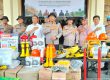
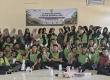
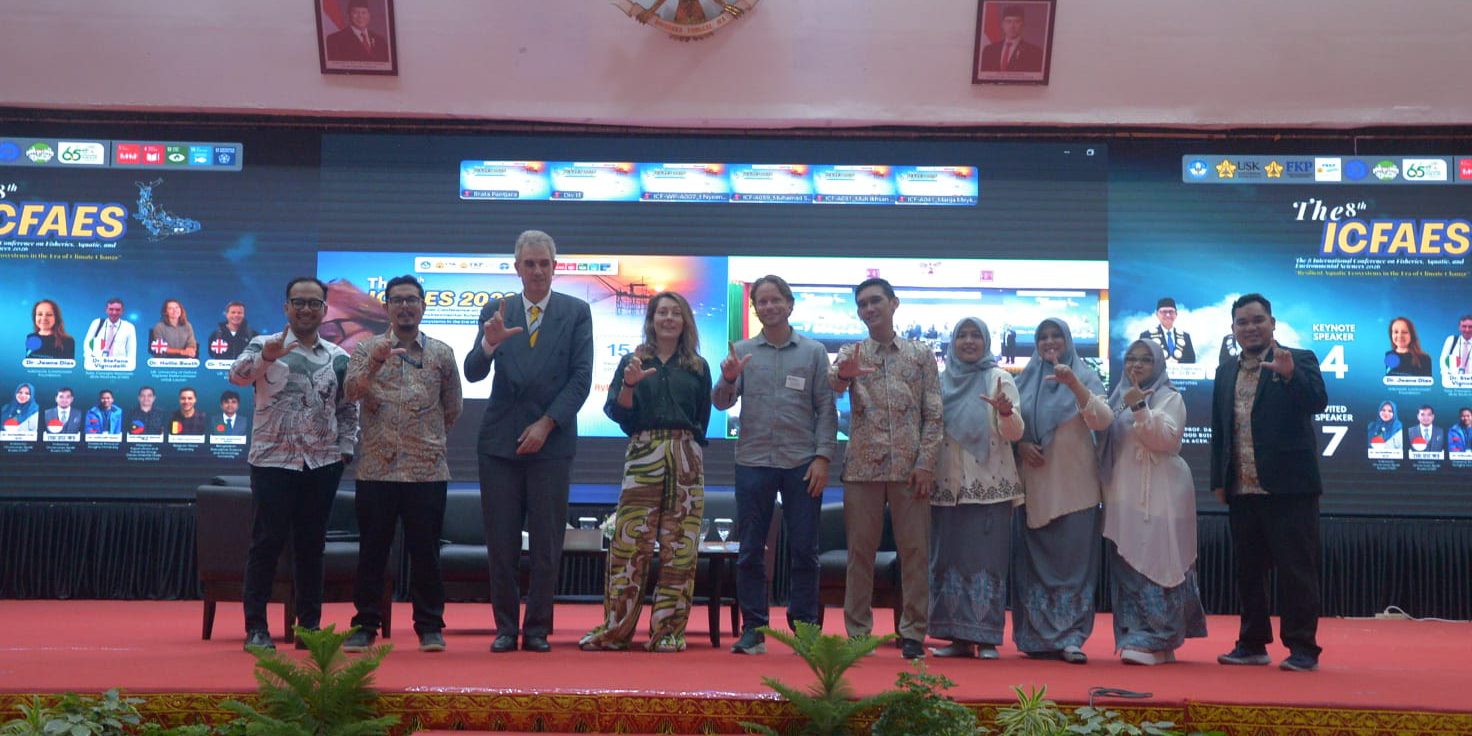
This issue was a central topic at the 8th International Conference on Fisheries, Aquatic and Environmental Sciences (ICFAES) 2026, organized by Universitas Syiah Kuala (USK) through its Faculty of Marine and Fisheries (FKP) on September 15, 2026, at AAC Prof. Dr Dayan Dawood, USK, Banda Aceh.
With the theme “Resilient Aquatic Ecosystems in the Era of Climate Change,” the conference gathered academics, researchers, practitioners, policymakers, and stakeholders to address challenges and solutions for sustaining aquatic and coastal ecosystems.
ICFAES 2026 received 97 abstracts for oral and poster presentations from 66 institutions, including universities, national research bodies, non-governmental organizations, and industry partners.
Participants and contributors came from 12 countries: Indonesia, the United Kingdom, Italy, Belgium, Thailand, the Philippines, Bangladesh, Malaysia, Nigeria, India, Japan, and Pakistan.
Dr Syahrul Purnawan, Chairperson of ICFAES 2026, stated that the conference served as a platform to enhance collaboration in science, conservation, and sustainable resource management.
“This theme reflects our shared commitment to addressing the growing challenges facing aquatic ecosystems and to strengthening collaboration in science, conservation, and sustainable resource management,” Syahrul said in his opening remarks at ICFAES 2026.
The forum also featured a private sector perspective. Adlan Yusran, Conservation Management & Nature-based Solutions Manager at PT Astra Agro Lestari Tbk, was an invited speaker who shared experiences and findings from Astra Agro’s community-based mangrove conservation initiatives in several coastal areas across Indonesia.
Astra Agro Lestari’s involvement in ICFAES exemplifies collaboration between academia and the corporate sector, advancing scientific knowledge and supporting environmental conservation.
Adlan presented a study titled “Strengthening Community-Based Mangrove Conservation and Ecosystem Service Efforts,” which highlighted the benefits of mangrove rehabilitation for ecosystem and biodiversity recovery, coastal protection, and increased economic benefits for local communities.
One example shared was a community-based mangrove conservation program in Kilangan Village, Aceh Singkil Regency.
The program was developed in partnership with the Payau Teluk Bayu Forest Farmers Group (KT HPTB) and supported by the Aceh Singkil Regency Environmental Agency.
Restoring Ecosystems and Strengthening Community Participation
After the 2005 Nias earthquake, the coastal area of Aceh Singkil experienced significant ecological changes, including 1 to 1.5 meters of land subsidence and altered hydrology in intertidal habitats.
These changes have increased the area’s vulnerability to sea-level rise and coastline shifts.
Astra Agro, KT HPTB, and the Aceh Singkil Regency Environmental Agency joined rehabilitation efforts through a program launched in Kilangan Village in 2018.
By 2026, over 54,000 mangrove trees had been planted across 18 hectares. The program was implemented in stages with local communities, with KT HPTB as the primary field partner.
In addition to rehabilitation, activities include biodiversity management, community empowerment, and collaborative research.
“Ecosystem resilience cannot be separated from the resilience of the communities living around it. Therefore, conservation approaches need to provide communities with opportunities to participate while also ensuring that they gain tangible benefits from the ecosystems they help protect,” Adlan said.
Community members also participate in biodiversity monitoring. After training, KT HPTB members have increasingly taken part in monitoring, enabling more independent area management and assessment of rehabilitation impacts.
Recent monitoring recorded 32 bird species from 20 families, including the Lesser Adjutant or bangau tongtong (Leptoptilos javanicus), Beach Thick-knee (Esacus magnirostris), and Changeable Hawk-Eagle (Nisaetus cirrhatus). Local residents have also reported the presence of estuarine crocodiles (Crocodylus porosus) within the rehabilitation area.
Mangrove rehabilitation also provides social and economic benefits. Communities in Kilangan Village utilize local aquatic resources, especially fish, crabs, nipah shellfish (lokan), and black snails.
Based on a rapid assessment involving 21 people, the gross economic value of these resources was estimated at Rp1.284 billion per year, with a net value of about Rp1.065 billion. The net economic value, at approximately Rp736.92 million, followed by fish at Rp289.99 million, nipah shellfish at Rp21.6 million, and black snails at Rp16.8 million per year.
These figures show that mangrove ecosystems provide both ecological value and significant support for local livelihoods.
The program aims to help communities gain greater value through sustainable resource management. Initiatives include optimizing micro-enterprises and lokan-based products, strengthening local institutions, and developing crab farming using silvofishery and floating cage systems.
“Nature-based solutions are not only about restoring vegetation cover. Equally important is ensuring that restored ecosystems provide tangible benefits and value to the communities living around them,” Adlan said.
Mangrove ecosystems also support community mobility. The road connecting Kilangan Village in Singkil District and Kayu Menang Village in Kuala Baru District, built incrementally by the Aceh Singkil Regency Government from 2009 to 2022, has reduced reliance on river transport.
The road is used by an average of 359 vehicles or 618 people daily. Mangrove vegetation acts as a natural barrier, protecting coastlines from erosion, waves, and coastal disasters. Monitoring mangrove areas is essential for maintaining ecosystem functions and supporting community connectivity.
According to Adlan, the experience in Aceh Singkil shows that mangrove conservation requires an integrated approach. Restoration must be accompanied by community capacity building, institutional strengthening, sustainable resource use, and regular monitoring.
“When communities have the capacity and space to become part of the conservation process, the sustainability of the program no longer depends solely on external interventions. Communities can grow into ecosystem stewards at the field level,” he said.
Reflecting the spirit of “Synergy Between Earth and People for One Indonesia,” the Aceh Singkil experience demonstrates that nature conservation and community well-being can advance together when grounded in science, collaboration, and community participation.
Ultimately, mangroves provide natural coastal defense, habitat for diverse species, and are integral to the communities that depend on them for their livelihoods.
Source: Jawapos.com
Disclaimer
This article may contain copyrighted material, the use of which may not have been pre-authorized by the copyright owner. This material is made available for the purpose of giving information and knowledge. The material contained on the Astra Agro website distributed without profit. If you are interested in using copyrighted material from this material for any reason that goes beyond ‘fair use’, you must first obtain permission from the original source