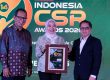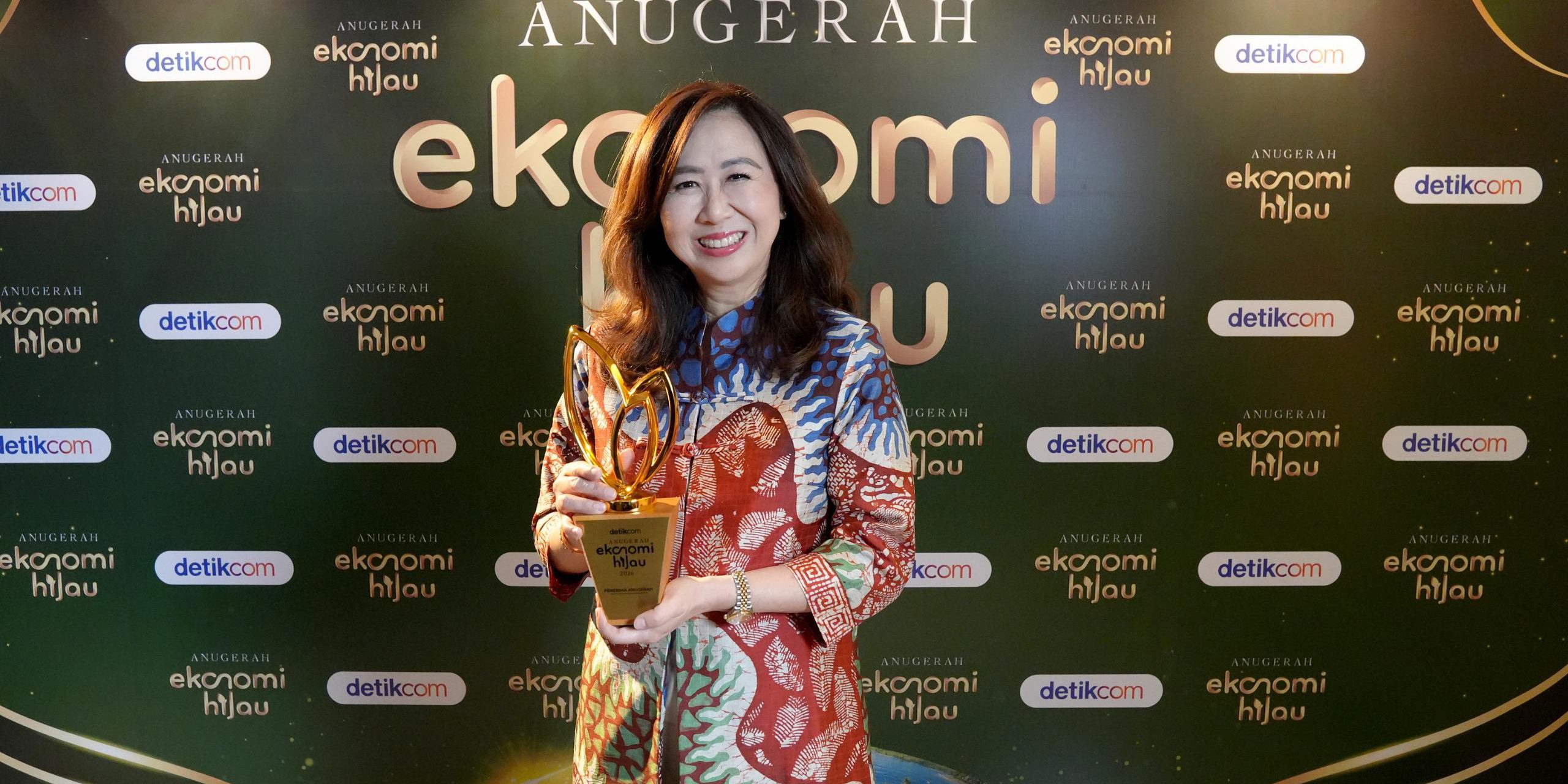
Jakarta — PT Astra Agro Lestari Tbk (Astra Agro) has received the 2026 Green Economy Award in recognition of its commitment to sustainable business practices and its role in advancing responsible, efficient, and sustainable transformation within the plantation industry.
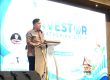
Tingning Sukowignjo, Director of PT Astra Agro Lestari Tbk, accepted the award at the 2026 Green Economy Award ceremony, organized by Detikcom and held on Thursday, September 3, at the Menara Bank Mega Auditorium in Jakarta. The event was attended by CT Corp’s founder and chairman, Chairul Tanjung, Minister of the Environment and head of the Environmental Control Agency (BPLH), Mohammad Jumhur Hidayat, and several Indonesian corporate leaders.
Minister of the Environment Mohammad Jumhur Hidayat emphasised the importance of leadership and the need for business examples in promoting economic growth alongside environmental sustainability.
In his opening speech at the 2026 Green Economy Award, Jumhur highlighted that meaningful change requires more than regulations and sanctions. He noted that leadership, recognition, reputation, and concrete examples are essential to demonstrate that economic growth can align with ecological responsibility.
The award recognizes Astra Agro’s efforts to promote responsible, efficient, and sustainable plantation practices. The company’s commitment is demonstrated through measurable environmental management, improved supply chain traceability, operational innovations, and community empowerment initiatives in its operating areas.
Tingning Sukowignjo stated that Astra Agro continues to strengthen its sustainability transformation through ongoing innovations in both plantation and mill operations.
Tingning explained that similar transformations are underway in the mills. Palm oil mill effluent, previously a major emission source, is now captured using methane-capture technology and converted into gas to fuel the boilers that support mill operation. This initiative is part of Astra Agro’s ongoing efforts to improve energy efficiency and reduce environmental impact.
These innovations are driven by Astra Agro’s Research and Development (R&D) team. The company developed ASTEMIC, an organic-based biofertiliser, to reduce dependence on chemical fertilisers, following research into microorganisms from its plantations.e of the use of ASTEMIC, Astra Agro has been able to cut down its reliance on chemical fertilisers by as much as 25 per cent. Aside from improving soil health, this innovation also aids the company in keeping crop productivity and in carrying out its long-term replanting programmes.
Astra Agro’s efforts to reduce environmental impact are further deepened by its achievement in reducing gas (GHG) emissions, in additionas well as intion and motivations.
In 2025, Astra Agro reduced its Scope 1 and Scope 2 greenhouse gas emissions by 35.69 percent compared to its 2019 baseline. This surpasses the company’s target of a 30 percent reduction by 2030.
At the same time, renewable energy accounted for 92.30 percent of Astra Agro’s energy mix, with ongoing efforts to reach its 93.40 percent target by 2030. This demonstrates that sustainability is integrated into the company’s daily operations, not just its policies.
Tingning stated that the award acts as both a form of recognition and an inTingning stated that the award serves as both recognition and motivation for Astra Agro to continue improving its practices and developing innovations that benefit the environment and local communities.e steps we have taken and at the same time urges us to keep on innovating and enhancing our positive impact on the environment, society, and business sustainability; this is consistent with our commitment to creating a synergy between the earth and humanity for the sake of one Indonesia,” concluded Tingning.