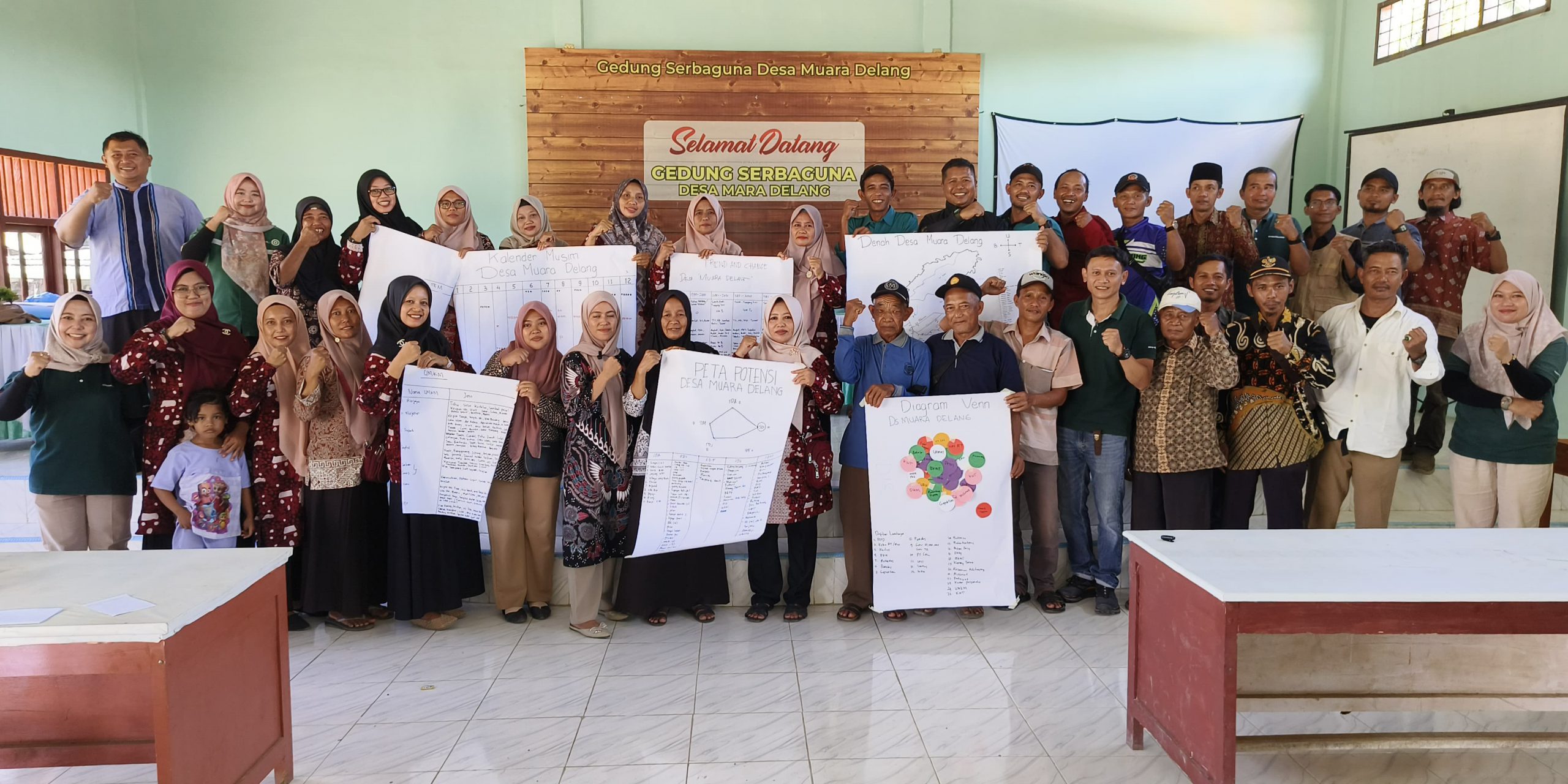
In the red dirt roads and shaded trees of Muara Delang Village, located in Merangin Regency, Jambi Province, the community is actively shaping its future. Instead of waiting for external assistance, villagers are taking the initiative to create change from within themselves.
As the community works to strengthen its foundation, the support of strategic partners becomes essential. In this context, PT Sari Aditya Loka (SAL), a subsidiary of Astra Agro Lestari, has stepped in—not as a provider of solutions, but as a partner in their journey.
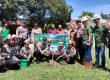
Through a modest forum known as a Focus Group Discussion (FGD), PT SAL engages in meaningful conversations with both the village community and the local government. These discussions aren’t merely a routine obligation for the company; rather, they serve as a space for collective reflection, where the village’s potential is explored, social data is evaluated, and development aspirations are shared.
Haidir, the Head of Muara Delang Village, expressed gratitude for the support from PT SAL throughout their journey. “This FGD program is immensely helpful for the village in determining the right direction for targeted development, similar to an area-based village approach,” he noted. “We have consistently felt the tangible and sustainable contributions of PT SAL’s corporate social responsibility (CSR) initiatives.”
While many development narratives focus on physical projects, PT SAL has chosen a quieter, more strategic path. This approach may sound abstract, but in practice, it involves creating space for learning, questioning, planning, and reshaping the community’s perspective on the resources available to them.
“Facilitation goes beyond mere assistance; it is a mentoring process that allows the community to recognize its potential, understand challenges, and take action,” explained Slamet Riyadi, Assistant of Sustainability at PT SAL.
Slamet highlighted that facilitation can take many forms, including mentoring, volunteering, providing extension services, and offering straightforward training sessions. These efforts, gradual yet impactful, change the way the community manages its village. In this context, development is not imposed from outside but flourishes from within.

The FGD employs a social mapping approach that explores socio-cultural conditions, human resource capacity, and local economic potential. As a result, Muara Delang Village is increasingly adept at formulating development directions based on both evidence and community participation.
Interestingly, discussions have also addressed essential but often overlooked issues, such as ensuring the effective use of village funds, pursuing development without compromising local identity, and maintaining communal spirit in the face of transactional approaches. In this regard, PT SAL’s facilitation model is significant. It does not impose regulations or demand conformity; rather, it creates a collaborative learning environment that fosters trust and encourages the village to express its own needs. PT SAL supports without dominating and accompanies without lecturing.
The presence of companies within the community is often measured by the amount of aid provided or projects executed. However, PT SAL sees things differently. They believe that developing a village is not about how much money is spent but rather about the depth of the impact left behind.
This philosophy aligns with the evolving spirit of village development, which now emphasizes inclusivity and participatory approaches. The central government encourages villages to become engines of development, and PT SAL chooses to be involved not as leaders, but as navigators, assisting villages in finding their own path.
“We do not want to take over; we want to accompany,” Slamet stated.
Although Muara Delang Village is still in the process of development, the direction and spirit are beginning to shift. There is a growing awareness that development is not merely about projects but rather a continuous process. Furthermore, strategic partners need not rely on heavy machinery or grand billboards; steadfast commitment and consistent dialogue can create significant change.
In essence, the true strength of facilitation programs like those implemented by PT Sari Aditya Loka lies in their ability to nurture hope rather than merely offer promises.

Source: Antara News
Disclaimer
This article may contain copyrighted material, the use of which may not have been pre-authorized by the copyright owner. This material is made available for the purpose of giving information and knowledge. The material contained on the Astra Agro website distributed without profit. If you are interested in using copyrighted material from this material for any reason that goes beyond ‘fair use’, you must first obtain permission from the original source