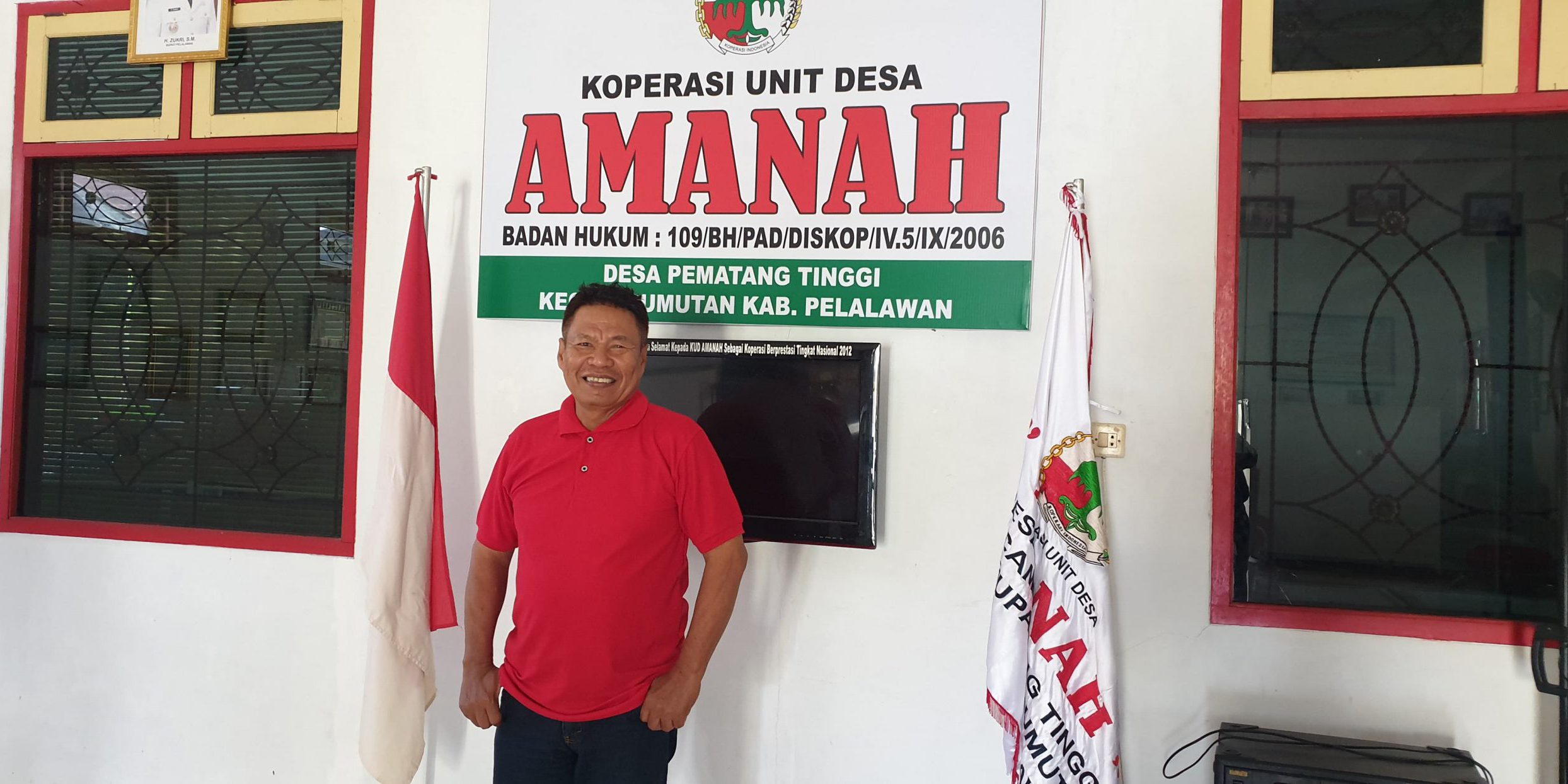
Thirty-seven years ago, Rachmat Sumekto arrived in the village of Pematang Tinggi, located in the Kerumutan District of Pelalawan Regency, Riau Province, with just one provision: hope. As a transmigrant from Central Java, Rachmat embarked on his journey filled with determination despite the doubts that lingered in his heart.
Participating in the PIR-Trans (Nucleus Estate and Smallholders – Transmigration Scheme) program meant leaving his large family in Yogyakarta since 1988. He vividly recalls his first day in the village, which was still underdeveloped and far removed from the hustle and bustle typical of his hometown.
Building a career as an oil palm farmer was never something Rachmat had envisioned. Before becoming acquainted with gardening tools such as dodos and egrek, he worked as a technician, primarily dealing with machines. “I used to be just a car mechanic. I was more accustomed to handling workshop tools than gardening equipment,” he said with a smile.
Despite his lack of experience in palm oil cultivation, Rachmat was not daunted by the challenges he faced. Difficult experiences, such as encounters with wild animals and bouts of malaria, only strengthened his resolve to embrace this new life.
Rachmat noted that, surprisingly, building a life as a transmigrant offered more opportunities than his previous job in Yogyakarta, where he earned a mere Rp800 per day. His determination to provide for his wife and children motivated him to take on the challenge of leaving his hometown.
Initially, his decision to join the PIR-Trans program faced opposition from his extended family. At that time, life as a transmigrant was very different from today; they often faced hardships and were frequently viewed as struggling individuals. “I even had to send a letter home pretending it was from my boss, who supposedly wanted to open a branch workshop in Sumatra,” he recalled with a laugh. Using that strategy, he successfully brought his small family to the land of hope in Riau, embarking on a week-long journey aboard a cargo ship.
Full of optimism, Rachmat was determined to integrate into the transmigrant community. Each morning, before starting on the fields, he and his wife would prepare a simple breakfast, reassuring their children that their decision to migrate would eventually bear fruit.
Over time, Rachmat’s life changed significantly. Through the PIR-Trans program, he and hundreds of other families received two hectares of land for farming and a plot for their homes. PT Sari Lembah Subur (PT SLS) not only acted as their business partner but also became a supportive friend throughout their journey.
PT SLS provided seeds, fertilizers, equipment, and technical training, along with guarantees for purchasing their harvest with a transparent weighing system. The palm oil company assisted them from the beginning, offering superior seeds, training in farming techniques, and support in managing their harvests.
“We started everything from scratch, guided by PT SLS, which taught us how to care for plants, recognize the right time for harvest, and even how to manage a cooperative,” explained Rachmat.
This effort led to the formation of KUD (Koperasi Unit Desa) Amanah in 1992, as part of the PIR-Trans initiative in Batang Kulim Village, Pelalawan Regency, Riau. This government program partnered with private companies, including PT SLS, to develop new areas, provide land to transmigrants, and establish oil palm plantations as a livelihood source.
Initially, community leaders asked Rachmat to lead the cooperative “for just one year.” However, his perseverance and integrity garnered the residents’ trust, leading them to encourage him to continue in the leadership role.
After more than 25 years, he remains in the position due to the community’s continued trust, as they have found it challenging to identify a suitable replacement.
Throughout their journey, the residents recognized Rachmat’s sincere dedication to improving their cooperative, seeing him not merely as someone seeking personal gain but as a leader focused on enhancing the welfare of its members. Today, KUD Amanah comprises more than 500 members overseeing thousands of hectares of productive palm oil plantations.
“For me, success is not about generating significant wealth, but about how I can help those around me live more prosperously,” he said.
Despite serving as chairman for 25 years and only managing his own two hectares of palm oil plantation, Rachmat takes pride in his members, who continue to expand their land each year. For him, this collective success is what truly matters.
When asked about the secrets to his success, Rachmat simply replied, “I never feel lacking. I am not ambitious. I just want to be a good person.”
Despite the challenges he faced, Rachmat successfully educated his three children, all of whom graduated from prestigious universities, including Gadjah Mada University and Stiper Agricultural Institute in Yogyakarta.
Source: Antara News
Disclaimer
This article may contain copyrighted material, the use of which may not have been pre-authorized by the copyright owner. This material is made available for the purpose of giving information and knowledge. The material contained on the Astra Agro website distributed without profit. If you are interested in using copyrighted material from this material for any reason that goes beyond ‘fair use’, you must first obtain permission from the original source