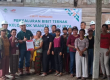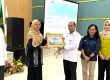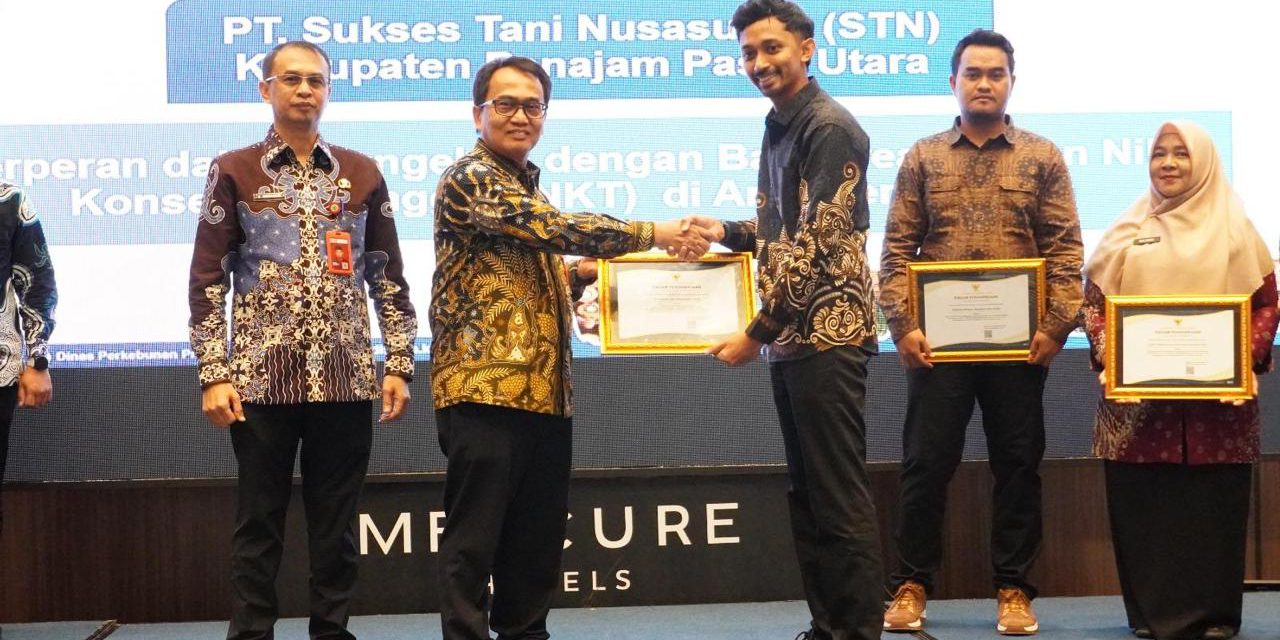
PT Sukses Tani Nusasubur (STN), a subsidiary of PT Astra Agro Lestari Tbk. (Astra Agro), received an award from the Governor of East Kalimantan for effective management of High Conservation Value (HCV) areas within its plantations.
The award was presented at the 2025 East Kalimantan Plantation Coordination Meeting, organised by the East Kalimantan Provincial Plantation Agency.
STN preserves the Goa Tolu Liang area in Babulu District, North Penajam Paser Regency, maintaining its natural ecosystem.
The protected area with karst rock formations that have formed naturally over thousands of years is still well preserved, including its water sources.
As a result, the area serves as a crucial habitat for local biodiversity.
Ujang Rachmad, Assistant II for Economy and Development of East Kalimantan Province, expressed his appreciation and gratitude to the award recipients.
He emphasised that this achievement was the result of cross-sector collaboration.
“The East Kalimantan Provincial Government highly appreciates the contributions of all parties who have actively promoted the advancement of the plantation sector.
Collaboration like this is the key to inclusive and sustainable regional economic development,” he said.

Similarly, A. Muzakkir, Acting Head of the East Kalimantan Plantation Service, expressed appreciation to all award recipients for their strong commitment to supporting regional plantation development programs. He noted that successful plantation development requires collaboration among multiple parties.
“We would like to express our gratitude and appreciation to all partners, business actors, officials, and farmer groups who have been actively contributing.
“This award is expected to inspire continued innovation and strengthen each party’s role in advancing sustainable and equitable plantations in East Kalimantan,” said Muzakkir.
Triputra, representing PT STN Management, stated that the company consistently applies a science-based approach by using High Conservation Value (HCV) assessment criteria to protect conservation areas.
The company is committed to adopting internationally recognized best practices for identifying, protecting, and managing HCV areas, referencing the Indonesian toolkit and guidelines from the High Conservation Value Network (HCVN).
“We will strive to build synergy between the environment and local communities around our operational areas, for one Indonesia,” he explained.
He explained that the HCV assessment was conducted to support sustainable palm oil plantation management, while prioritizing biodiversity conservation and the area’s ecological functions.
PT STN’s conservation of Tolu Liang Cave maintains natural ecological conditions, with ironwood and meranti trees among the forest vegetation and undisturbed rattan growth.
Eagles and hornbills can still be seen flying across the forest, while gibbons call out each morning from their arboreal habitats.
The presence of these animals indicates that the area’s ecological functions remain intact. Consistent management is essential for maintaining long-term ecological balance.
Eagles and hornbills continue to fly between forest patches, while gibbons sing each morning in their arboreal habitat.
The presence of these animals indicates that the area’s ecological functions are well maintained. Ongoing management is vital for sustaining ecological balance over time.
Karst Landscape Area is in accordance with the Indonesian Ministry of Energy and Mineral Resources’ Regulation No. 17 of 2012 concerning the Determination of Karst Landscapes.
This policy aims to regulate the protection of Karst Landscape Areas that function as natural water regulators, preserve Karst Landscape Areas that have unique and scientific value as objects of research and investigation for the development of science, and control the utilisation of Karst Landscape Areas.
Astra Agro has implemented a sustainability policy, including zero deforestation across all operations since 2015.
This sustainability policy is integral to the company and applies to the entire supply chain, including core plantations, plasma plantations, and third-party suppliers.
Astra Agro’s zero deforestation policy has four main points, namely:
First, no development in High Carbon Stock (HCS) forests.
Second, no development in areas with High Conservation Value (HCV).
Third, no burning.
Fourth, reducing greenhouse gas (GHG) emissions in plantations.
For information, High Conservation Value (HCV) areas are landscapes that have unique or significant importance in biological, ecological, hydrological, and socio-cultural contexts.

Source: Tribun News
Disclaimer
This article may contain copyrighted material, the use of which may not have been pre-authorized by the copyright owner. This material is made available for the purpose of giving information and knowledge. The material contained on the Astra Agro website distributed without profit. If you are interested in using copyrighted material from this material for any reason that goes beyond ‘fair use’, you must first obtain permission from the original source