PT Astra Agro Lestari Tbk (Astra Agro) reaffirms its commitment to the sustainable productivity of palm oil. This commitment is an integral component of the company’s strategy, realized through innovation, inclusivity, and the application of technology.
During a recent address, the Coordinating Minister for Infrastructure and Regional Development, Agus Harimurti Yudhoyono, emphasized that developing nations such as Indonesia must chart their own pathways toward sustainable development, rather than merely emulating the practices of developed countries.
There exists no universal formula for progress. The attainment of advancement should not come at the expense of environmental integrity or financial stability. “Investment and sustainability must coexist harmoniously,” Minister Yudhoyono stated in a written communication on Saturday, October 11, 2025.
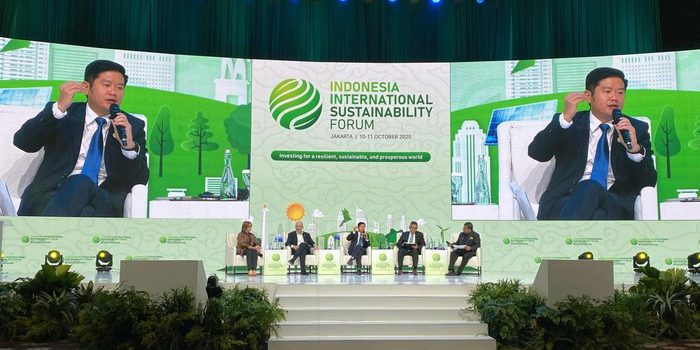
This statement was made during the Indonesia International Sustainability Forum (IISF) on October 10.
Additionally, the President Director of PT Astra Agro Lestari Tbk, Djap Tet Fa, articulated that the organization is dedicated to constructing an inclusive, technology-driven, and environmentally sound agricultural model.
“A model that can guarantee future food security through a combination of innovation, partnerships, and sustainability,” stated Djap Tet Fa.
In alignment with Yudhoyono’s perspective on the significance of taking realistic and future-oriented measures to promote independence, Astra Agro Lestari has developed a sustainable agriculture model that emphasizes collaboration between the public and private sectors.
During a discussion session entitled ‘Sustainable Agriculture,’ Djap Tet Fa highlighted the critical role of public-private partnerships in ensuring enduring food security.
He elucidated that the principle of ‘sustainable intensification,’ which involves increasing productivity from existing land without expanding the cultivated area, lies at the core of Astra Agro Lestari’s strategy.
Key initiatives implemented by Astra Agro include the rejuvenation of aging plantations with superior varieties to enhance productivity without the necessity of opening new land. Continuous research and innovation are prioritized, exemplified by the development of organic biofertilizers aimed at improving soil health, reducing reliance on chemical fertilizers, and minimizing carbon emissions. Astra Agro Lestari is also committed to supporting smallholder farmers.
“No one shall be left behind,” Djap Tet Fa asserted during his presentation.
He reiterated the commitment to ensuring equitable access to planting materials, fertilizers, financing, and training for partner farmers.
Furthermore, the integration of digital technologies, including drones, artificial intelligence (AI), and data analytics, is prioritized to monitor garden health and optimize harvesting efficiency. Additionally, the implementation of the Indonesian Sustainable Palm Oil (ISPO) standard, coupled with adherence to the no deforestation, peatland conservation, and respect for human rights (NDPE) policy, underscores Astra Agro Lestari’s commitment to responsible, transparent, and deforestation-free sustainable practices.
Empowering Smallholder Farmers Through Technology
Djap Tet Fa underscored the significance of palm oil farmers, specifically smallholders, as key partners of Astra Agro in promoting food security and advancing industry sustainability.
“Our mission is clear: small farmers must develop alongside us, ensuring they do not fall behind,” he articulated.
Through the Smallholder Inclusion Program, Astra Agro Lestari has collaborated with thousands of partner farmers to cultivate a more resilient and modern agricultural ecosystem. This initiative encompasses capacity building for farmers, which includes field training focused on pest management, precision fertilization, and sustainable land management practices.
Moreover, Astra Agro facilitates market access and financing by directly purchasing harvests from partner farmers through transparent, long-term contracts while also assisting access to financial institutions. The role of digitalization is equally vital in supporting all corporate programs.
Astra Agro maximizes the utilization of digital platforms to facilitate real-time planning of harvest deliveries, price monitoring, and agronomic consultations. Djap Tet Fa, an alumnus of Gadjah Mada University, articulated that the empowerment of smallholder farmers is not solely a social responsibility; rather, it constitutes a strategic investment in the resilience of the national agricultural system.
“When farmers gain access to the necessary tools, skills, and markets, they become genuine partners in strengthening national food security, ensuring that sustainability benefits accrue to all stakeholders,” he concluded.

Through these various initiatives, Astra Agro Lestari demonstrates that productivity and sustainability are not opposing concepts but rather complementary elements of a cohesive vision for a resilient, inclusive, and environmentally sustainable agricultural future.
The proactive measures undertaken by Astra Agro Lestari represent a critical component of Indonesia’s path towards a sustainable future.
Additionally, it is pertinent to note that the IISF 2025 forum, under the theme ‘Investing for a Resilient, Sustainable, and Prosperous World,’ will feature over 250 speakers and will be attended by more than 100 global business leaders and philanthropists. This forum reaffirms Indonesia’s commitment to the agenda of a green economic transition, food security, and renewable energy.
Source: Detik Finance
Disclaimer
This article may contain copyrighted material, the use of which may not have been pre-authorized by the copyright owner. This material is made available for the purpose of giving information and knowledge. The material contained on the Astra Agro website distributed without profit. If you are interested in using copyrighted material from this material for any reason that goes beyond ‘fair use’, you must first obtain permission from the original source