Amidst the vast green expanse of the oil palm plantation, life thrives, not only for the plants but also for millions of people who place their hopes there. The synergy between nature and the living beings within it has fostered a sustainable and interconnected ecosystem.
Oil palm, like any other plant, absorbs carbon dioxide and releases the oxygen essential for life. According to the book “Myths vs. Facts of Palm Oil,” published by the Palm Oil Agribusiness Strategic Policy Institute (PASPI), each hectare of oil palm plantation can absorb 64 tons of carbon dioxide annually and produce approximately 18 tons of oxygen.
Despite these benefits, oil palm is often portrayed negatively, particularly regarding its contribution to greenhouse gas (GHG) emissions that exacerbate global warming.
It is crucial to recognize that global warming can also affect oil palm plantations. For example, the El Niño phenomenon led to extreme hot weather, disrupting national production in 2023 and potentially impacting crop productivity in the long term. Climate change has become a significant challenge for the global community, affecting various sectors, including the palm oil industry.
Greenhouse gases alter the climate by functioning like a greenhouse, absorbing energy and slowing down the release of energy back into space. Gases such as carbon dioxide (CO₂) and methane (CH₄) have different capabilities to absorb solar heat and varying lifespans in the atmosphere—some dissipate quickly, while others linger for decades or even centuries.
The Earth naturally maintains a balanced system where the energy received from the sun equals the energy reflected back into space. This balance stabilizes the Earth’s temperature and sustains life. However, due to human and industrial activities, the concentration of greenhouse gases in the atmosphere has increased. Consequently, more heat is trapped, causing a rise in Earth’s temperature, commonly referred to as climate change or global warming.
In the palm oil industry, as noted in the Journal of Natural Resources and Environmental Management, there is a pressing need to boost the productivity of fresh fruit bunches (FFB) to meet market demand for vegetable oil.
This often involves land expansion and fertilizer intensification. However, these activities significantly increase greenhouse gas emissions, further impacting climate change.
PT Astra Agro Lestari Tbk (Astra Agro), a key player in the palm oil industry, has also felt the effects of climate change and extreme weather. The company experienced a decline in FFB production due to a prolonged drought in 2019 and the summer heat that extended into 2024.
Recognizing the importance of sustainable practices, Astra Agro established a Sustainability Policy in 2015. This initiative has motivated all employees to commit to protecting the environmental ecosystem, emphasizing transparency in managing carbon emissions and reducing greenhouse gases to help combat climate change.
Currently, Astra Agro measures its greenhouse gas emissions, categorized as Scope 1 and 2 emissions, from 46 subsidiaries, which include core plantations, palm oil processing mills, refineries, NPK blending plants, and the headquarters.
Astra Agro has achieved significant environmental performance milestones, surpassing various targets set in its Sustainability Aspiration 2030. The company’s use of renewable energy reached 92.17%, leading to a reduction of 126.3 ktCO2eq in greenhouse gas emissions.
In 2024, Astra Agro successfully reduced its emission intensity compared to 2023. This initiative will positively impact the company’s roadmap for reducing greenhouse gas emissions and ensuring sustainable operations in the future.
These achievements stem from various greenhouse gas emission reduction programs implemented across all subsidiaries, supporting the 2030 Nationally Determined Contribution and the 2060 Net Zero Emission (NZE) goals.
Astra Agro has also developed a Nature-based Solution (NbS) program, which not only aims to reduce carbon emissions but also to enhance and improve ecosystem quality.
As of 2024, Astra Agro has planted forest trees across an area of 201 hectares, totaling approximately 173,240 trees. Additionally, the company has implemented a solar Water Management System (WMS), conserving 200,000 liters of water by replacing existing pump capabilities.
Astra Agro is making significant strides in waste management. The ratio of treated B3 solid waste to generated B3 solid waste has increased from 0.48% in 2023 to 0.68% in 2024. Additionally, the company has achieved a 100% ratio for B3 liquid waste to generated waste in both 2023 and 2024.
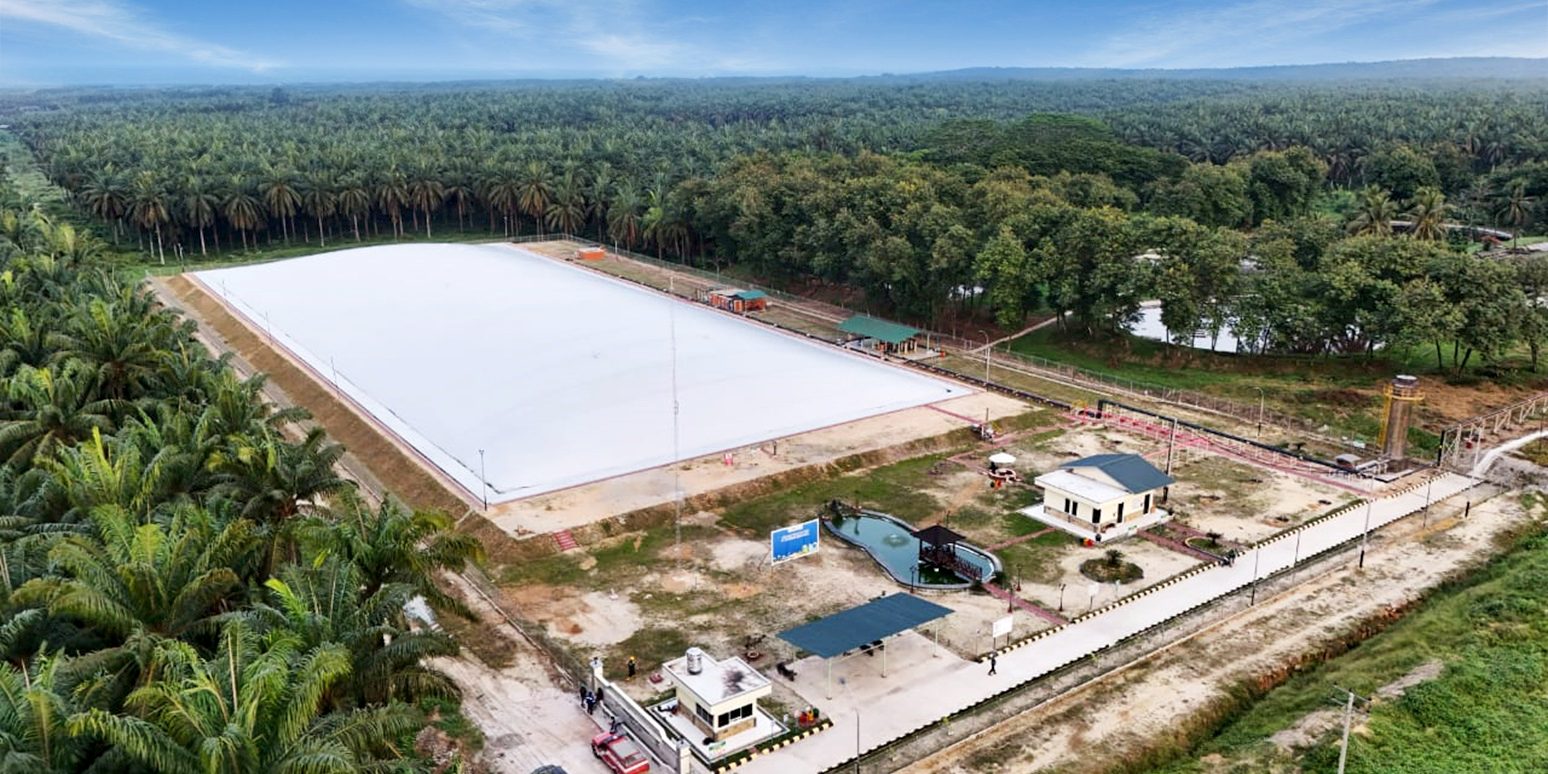
To further enhance their sustainability efforts, Astra Agro has implemented several initiatives. These include the use of liquid waste, known as Palm Oil Mill Effluent (POME), which is rich in organic matter, to generate new renewable energy. The company is also building methane capture facilities and has reduced coal usage by substituting it with palm kernel shells.
Research from the Journal of Natural Resources and Environmental Management highlights that fertilization significantly contributes to greenhouse gas emissions, as fertilizers contain elements like CO2 and N2O that can lead to such emissions. Nevertheless, the application of fertilizers is crucial for achieving optimal productivity.
In response, Astra Agro has begun reducing the use of chemical fertilizers, such as NPK, by adopting manufactured fertilizer products that utilize ASTEMIC (Astra Efficient Microbe) biological fertilizer. This innovative product is based on specific microbes and is applied across a 50,000-hectare mineral area.
All of Astra Agro’s initiatives to reduce greenhouse gas emissions align with the company’s sustainability strategy, known as Astra Agro Sustainability Aspirations 2030. This strategy focuses on minimizing the impact of greenhouse gases, promoting diversity and inclusion in the environment, and ensuring that the company’s operations positively affect both local communities and the nation, in line with its mission to prosper alongside the nations.
Astra Agro’s commitment and achievements in sustainability have been recognized through various awards. Notably, the company received The Best Corporate Emission Reduction Transparency Award in 2025, along with the Green Achievement Award in Emission Reduction and the Diamond Achievement in Emission Transparency.